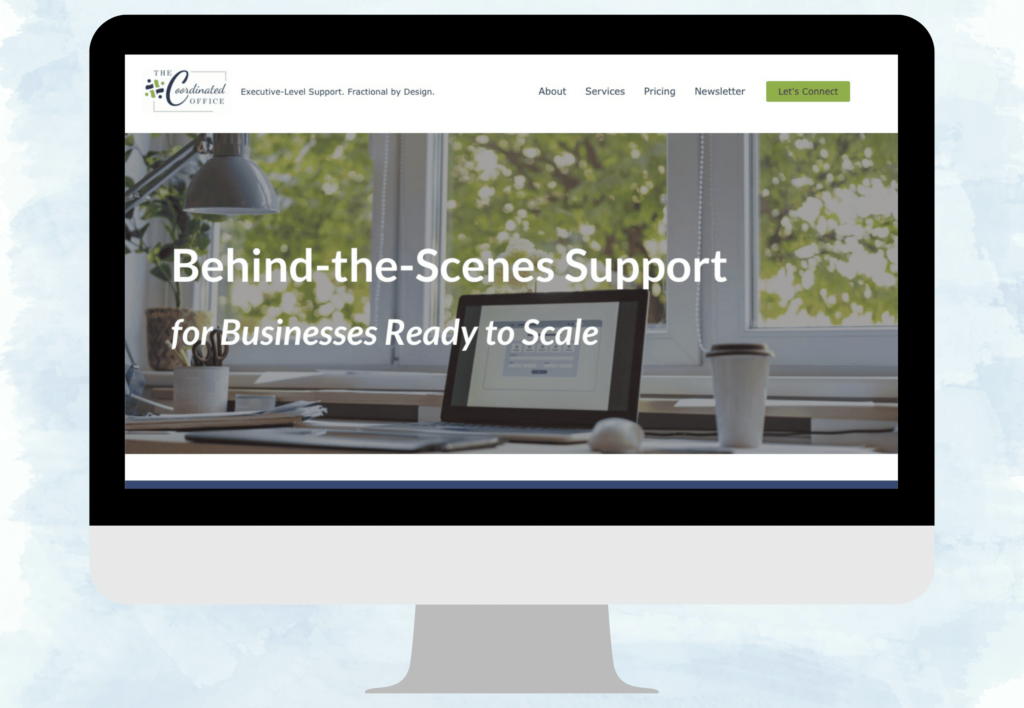
As any small business owner knows, a website is an essential tool to showcase to the world both you and your business, be that product or service based. It can be a huge undertaking to plan out and design a website let alone execute the launch, which is why busy business owners will outsource their website to media agencies. Once launched, what happens next? Is it reasonable to assume your website no longer needs your attention?
Earlier this year, I helped a client by building a website for his business. It was significantly more robust than his previous version, and while it looked and performed well, I noticed some issues when I was adding a new webpage. What followed was a deep dive into why reviewing any website from time to time is important.
- Ensure links are re-directing as intended – Don’t assume the links on your website are working fine, test them out. It can be a frustrating experience for visitors to your site if a link fails to deliver as promised. Usually, a broken link is an oversight but as new pages are added or revisions to the website are made, it is easy for a link to no longer redirect where it should. Check them out to ensure your visitors find the information they need and don’t leave frustrated.
- FYI – If a link takes your visitor to another site, be sure this opens in a new tab. That way, your visitor can easily click back to your website and continue perusing it. This is an easy setting that can keep visitors on your site.
- Ensure your logo and graphics are displaying properly – Nothing screams unprofessional like having a logo or graphics that are pixelated (fuzzy) on a website or that have a white background instead of transparent. A little tweaking using photo editing software like Canva can go a long way to giving a much better impression of your business. Important also is the size of the images, as high resolution graphic can slow down loading speed making the user experience frustrating. A good rule of thumb is to keep images under 1 mb and 72 dpi works fine for on-screen viewing.
- Optimize each webpage for different screen sizes – What appears on your computer monitor and how it is displayed on a mobile phone screen can be significantly different. Take the time to ensure that each page is optimized for desktop/laptop, tablet and phone in addition to portrait vs. landscape perspectives. Some elements and layouts may need adjusting to ensure they are displayed properly. While this can be time consuming, it is an important aspect of a professionally developed website.
- Ensure updates are kept current – All software requires regular updates and serves as protection against hackers who have found vulnerabilities. Active developers provide regular updates to fix these vulnerabilities and ignoring them or thinking them unimportant leaves you susceptible to hacks and back-door access. Keep your plug-ins and software running on the latest versions to prevent any major headaches down the road.
- FYI – Be sure to perform an external back up before any significant updates. Software or plug-in updates can, at times, create conflicts leading to websites not displaying properly or even crashing. Having a recent back-up of your site to revert back to is a good ‘insurance policy’ and a huge time saver should this scenario occur.
- FYI – Be sure to perform an external back up before any significant updates. Software or plug-in updates can, at times, create conflicts leading to websites not displaying properly or even crashing. Having a recent back-up of your site to revert back to is a good ‘insurance policy’ and a huge time saver should this scenario occur.
- Create a Blog Page and Regularly Relevant Content – A blog page is an important part of a website, and more than just a nice-to-have. When you establish a blog page and regularly add content that is relevant to your readers you’re building your brand’s authority as a trusted resource in the industry. Regularly updated blogs also boost SEO, as search engines favor websites with fresh content. They also support your social media too, giving you valuable insights to share and driving traffic back to your website.
Your website isn’t a static brochure, it’s a dynamic part of your business and it deserves to be treated that way. When was the last time you experienced it as a visitor? Click through the links, read the content with a fresh set of eyes, and check how each page displays across screen sizes. These are often the first things a prospective client notices, often without realizing it.
A little preventative maintenance, like regular updates along with routine backups, goes a long way towards protecting this valuable tool that represents your business to the world. Add regular blogging into the mix, and now you’re actively showcasing it. If it has been a while since someone took a look at your website or if you would like help in setting up your blog, I’m happy to have a chat.
“The only constant is change.” — Heraclitus

In today’s fast-moving world, time is one of your most valuable resources. The Coordinated Office was created: to provide reliable, fractional, executive level virtual assistance to help entrepreneurs and small business owners reclaim their time, refocus on what truly matters, and scale effectively.
If you’ve been meaning to get more organized, more automated, or simply less stretched, I’d love to have a conversation.